Monday, April 23, 2007

Global Days of Action for Darfur

We are now officially in the Global Days of Action for Darfur (April 23-30). The goal for the next week is for all of us to take action, to tell our leaders "Time Has Run Out for Talk" and that it is time to implement--and enforce--tough sanctions that compel the government of Sudan to allow the deployment of international peacekeepers.

What you can do:

1) Call the White House--(202) 456-1414. Tell the President you support the sanctions he spoke about in his speech on April 18th at the US Holocaust Memorial Museum and that you want them implemented by May 1 if international peacekeepers have not been deployed to Darfur.

Read President Bush's Speech

2) Support divestment and learn what you can do to keep your money from funding the genocide:

Let Senator Cornyn know you support the
Sudan Divestment Authorization Act of 2007 (S. 831) he introduced that makes it clear it is constitutional for states to divest from companies doing business with the government of Sudan. 202-224-2934 Read what Senator Cornyn has to say about Darfur

Ask Senator Hutchison to support the Sudan Divestment Authorization Act of 2007 (S. 831) introduced by Senator Cornyn.
202-224-5922

Tell your state representative that you support Texas' divestment from companies doing business with the government of Sudan (HB 1569). Find your Representative

Learn more about divestment (and perhaps work to personally divest):

www.sudandivestment.org
www.fidelityoutofsudan.org

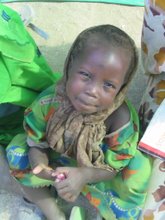
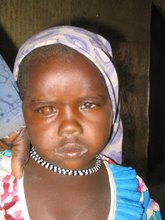
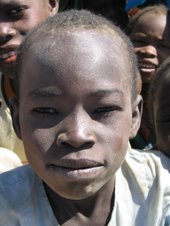
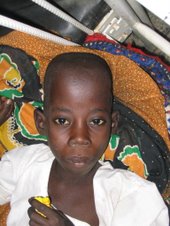
3) Contribute to humanitarian aid through the International Medical Corps--specify Chad/Darfur on the drop-down menu. Pictures of refugees on this page were taken at an IMC refugee camp in Chad.

4) Host a Gathering Against Genocide (GAG) in your home or at the San Antonio Holocaust Museum. These events are designed to educate others about what is happening in Darfur and spur them to action. You might show the movie Hotel Rwanda, then hold a letter writing session. Or, hold a "Dinner for Darfur" where you ask your guests for donations for humanitarian aid. There are endless opportunities for action. Be creative. The more people working to end this crisis, the more effective we will be.

5) If you are a gallery or restaurant owner or manager and would like to spread the word about Darfur, contact us about displaying photographs of refugees, taken by Caesar Ricci. We have framed, high-quality photographs ready for display. Help spread the word! Email SAIDC@earthlink.net for information.

6) Come to the next SAIDC meeting (May 22) to learn about what we have in the works, and contribute your ideas!


Wednesday, April 18, 2007

Remembering Peter Monod

We are sad to report that a founding member of SAIDC, Peter Monod, has passed away. Peter represented the Archdiocese of San Antonio. Please read more about this giving person at:

Peter Monod

He will be sorely missed.

Saturday, April 14, 2007

Senate Committee on Foreign Relations Darfur Hearing

The Senate Commiteee on Foreign Relations held hearings concerning Darfur on April 11th. You can read what they heard at:

Darfur: A Plan to Stop Genocide

Lawrence Rossin from the Save Darfur Coalition was one of the speakers. His comments have good information on the latest thoughts from Save Darfur concerning what the US needs to be doing to help the people of Darfur.

Sunday, April 1, 2007

YOM HASHOAH

Those of us attempting to stop the genocide in Darfur have much to learn from those who have survived a genocide. Jay Ipson, Holocaust survivor and director of the Virginia Holocaust Museum, will be the guest speaker at Yom Hashoah on Sunday, April 15, 2007 at 7:30 p.m. at Congregation Agudas Achim. For more information go to the Jewish Federation of San Antonio.

Thursday, March 29, 2007

Staying Motivated


I hate to admit that I have always been uneasy writing letters to my congressional representatives. I felt like it was a somewhat worthless activity that would not make a difference, especially when my view differed strongly from that of my representative. However, I have had a change of heart after attending a session at the Genocide Prevention Advanced Leadership Summit at the US Holocaust Memorial Museum. One of the sessions leaders in a workshop I attended is a former congressional staffer and he had great insight in to how this process works. Some of you probably already know about this, but for the uninformed (like me!) I offer the following:

Congressional staffers are busy, busy, busy, however, they are interested in meaningful dialogue. Advocates who are effective are the ones who can get their paper pushed to the top of the stack. How to do that?
-Prove that we are trustworthy and reasonable.
-Suggest actions that are specific and achievable--give them somewhere to go
-Represent more than yourself (show that you are part of a group of people)
-Follow-up! This is important. If you talk with a staffer, follow-up with a letter. Ask for a response to your issue and a "thank you" for their time.
-Never be afraid to communicate! While "blitz" campaigns where tons of letters are sent on the same topic in a short-period of time can have an impact, it is the week-by-week letters on the same issue that have the biggest impact.

This last point was a theme throughout the Summit. I heard from many people representing many different organizations that we need to build a coalition of genocide prevention that will last long past Darfur. Small efforts over the long-haul are needed to keep our activism meaningful. I think this is such an important point. I think that sometimes people feel like the little they are doing does not matter that much, so they stop doing it. That is simply not true. The little things are in many ways what matter the most. A speaker from a humanitarian aid group said that they love the $5 donations they get as much as the huge grants. It all ultimately matters. So, keep writing those letters, sending those donations, making those phone calls. We can make a difference. Do not let the bad news you read about Darfur cause you to lose hope. Keep thinking about the individuals, people like Mohamed and Omar and Clementine (see previous post) and remember they are the ones we are doing this for. Focus on the one person you can help today. To them, whatever you do will matter.

Susan

Sunday, March 25, 2007

Genocide Prevention Advanced Leadership Summit

I have just returned from the Genocide Prevention Advanced Leadership Summit at the US Holocaust Memorial Museum in Washington, DC. I learned so much about the work we are all engaged in and will be blogging over the next several weeks about my experiences, sharing with you many great ideas for continuing our fight against genocide. I want to start by sharing a few statements made by survivors of genocide who were present at the summit. I hope you find their words as inspiring as I did:


Commenting on the international community waiting on Sudan to give permision to place a UN Peacekeeping Force in to Darfur, Mohamed Yahya of Darfur had this to say:

"You are waiting for Hitler to give permission to free the Jews."


Omar Ismail, also of Darfur, offered us this thought as a way to stay motivated:

"What can you do today to make the life of one person in Darfur better?"

I think this is such an important thought to keep in mind. It can be overwhelming to think of helping all the people of Darfur and even more so to think of helping all the people in the world who need us. Focus on one person a day.

The Summit ended with nineteen year old Clementine Wamariya of Rwanda telling her story of escape from genocide when she was only six (read her story here Clementine's Story.) She is a wonderful story-teller and gave a heart-wrenching account of her escape with her older sister and the loss of family and friends along the way. After experiencing horrors that no person, much less a child, should have to go through they made it to Burundi, where they were taken in by a farmer and his family. Clementine, who had come for a fairly well-off family. had this to say of her stay with them:

"They lived in a mud hut, they were very poor, no electricity, it was hot. It was the best life anyone could have, because they were alive and loved one another."

Typing these words brought tears to my eyes. I hope they have touched you in a similar way.

Friday, March 23, 2007

World Affairs Council: "Surviving a Genocide: The Darfur Refugee Experience," with Caesar Ricci On April 9

SAIDC Member and local liason for the national Save Darfur Coalition Caesar Ricci will give a presentation for the World Affairs Council of San Antonio on April 9-- "Surviving Genocide: The Darfur Refugee Experience." This is an incredible opportunity to educate the San Antonio business and professional community about the Darfur conflict, please consider attending to show your support and encourage your colleagues to attend as well!

April 9, 2007
The Omni San Antonio Hotel (9821 Colonnade Blvd.)
11:30 Reception, 12 p.m.
Lunch $ 25 for members, $ 35 for non-members
Corporate Tables Available at $500, $750, and $1,000

Shaken by the humanitarian crisis that has engulfed the Darfur region of the Sudan since government-backed militias began to carry out organized campaigns of murder, rape and economic destruction against the black African population there, student activist Caesar Ricci has travailed for the past four years to bring some relief to those most affected. With the conflict now spreading to nearby Chad, Mr. Ricci visited the Gaga Refugee Camp on the Chadean border to witness the horror and pain first-hand. With photographs documenting the experience, Mr. Ricci will tell of what has and can be done to end what President Bush has called the first genocide of the twenty-first century.

Call Ragan Updegraff at (210) 308-9494 to make reservations