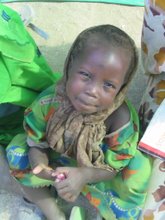
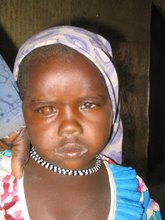
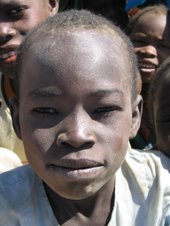
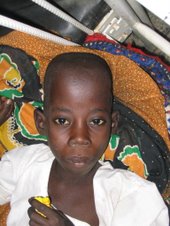
Dateline followed George Clooney (along with John Prendergast of the Enough Project) as they visited Sudan and talked to the people there about what is happening in their country and the fear that war will break out again soon in response to the January 9, 2011 vote for independence by the south. Excellent show to bring you up-to-date on the current situation in Sudan. You can watch it here:
Winds of War
Showing posts with label Sudan. Show all posts
Showing posts with label Sudan. Show all posts
Saturday, December 4, 2010
Monday, April 27, 2009
Fast for Darfur
Activist-actress Mia Farrow will begin an extended hunger strike in solidarity with the people of Darfur today. She intends to continue this water-only fast for 21 days. Others will join by participating in water-only and/or “refugee rations” fasts to bring attention to the immediate humanitarian crisis in Darfur created by the expulsion of aid organizations by the government of Sudan. Darfur Fast for Life demands from our leaders around the world to be ambitious and work on creating lasting peace in Sudan and guaranteeing the respect for the human rights of all.
San Antonio stands strong with the people of Darfur, with numerous participants in this fast. If you would like to join the fast, email ContactSAIDC at gmail.com to be added to the fast list--specify the day(s) you wish to fast, your city, and whether you will fast on water only or on refugee rations.
What else you can do:
Contact your Senators and Representatives today by dialing 1-800-GENOCIDE (1-800-436-6243 ), tell them to:
Publicly support the International Criminal Court’s indictment of Sudan’s President al-Bashir.
Urgently seek the return of humanitarian aid agencies to Darfur.
Pressure the UN Security Council to ensure protection for Darfur’s civilians.
Work towards a peace agreement in Sudan which allows Darfuri’s to return home.
San Antonio stands strong with the people of Darfur, with numerous participants in this fast. If you would like to join the fast, email ContactSAIDC at gmail.com to be added to the fast list--specify the day(s) you wish to fast, your city, and whether you will fast on water only or on refugee rations.
What else you can do:
Contact your Senators and Representatives today by dialing 1-800-GENOCIDE (1-800-436-6243 ), tell them to:
Publicly support the International Criminal Court’s indictment of Sudan’s President al-Bashir.
Urgently seek the return of humanitarian aid agencies to Darfur.
Pressure the UN Security Council to ensure protection for Darfur’s civilians.
Work towards a peace agreement in Sudan which allows Darfuri’s to return home.

Thursday, February 12, 2009
LEADING DARFUR ADVOCACY GROUPS CALL ON SUDANESE AUTHORITIES
Take Action: Sign the petition at: http://action.savedarfur.org/campaign/iccownerhp
Groups: 'The Government of Sudan will be held responsible for any preemptive or retaliatory actions against civilians, humanitarian aid workers, or peacekeeping forces'
WASHINGTON - The Save Darfur Coalition - in coordination with the Enough Project, Genocide Intervention Network, Refugees International, Physicians for Human Rights, Stop Genocide Now, Africa Action and American Jewish World Service - today released a statement on the reported decision by the International Criminal Court judges to issue an arrest warrant for Sudanese President al-Bashir. The organizations urged Sudanese authorities to comply with their obligation to cooperate with the court. The organizations also urged the U.S., the U.N., and the international community to take all necessary steps to ensure the protection of civilians, aid workers and peacekeepers in Darfur, and to focus renewed diplomatic efforts on building a lasting and inclusive peace for all of Sudan.
The full statement appears below.
"The judges of the International Criminal Court (ICC) will soon act on the prosecutor's request for an arrest warrant for Sudanese President Omar al-Bashir.
"Their decision will likely add international legal weight to a long obvious truth - primary responsibility for the atrocities in Darfur rests with the regime that Bashir heads. Individual nations and the international community as a whole cannot continue to do business as usual with Bashir once he is an indicted war criminal. At a minimum, countries should not allow him to travel to their territory and should limit diplomatic interaction with him in Khartoum to efforts to end the crisis in Darfur and bring peace to all of Sudan. He should not be allowed to attend summits, international conferences or similar functions. A regime led by an indicted war criminal cannot possibly be treated as a full member of the community of nations. The international community must press Sudanese authorities to comply with their obligations to cooperate with the ICC, including executing all outstanding warrants.
"The ICC decision will present both challenges and opportunities. The international community, led by the United States and other members of the United Nations Security Council, must first and foremost meet the challenges. It must make absolutely clear that the Government of Sudan will be held responsible for any preemptive or retaliatory action against civilians, humanitarian aid workers, or United Nations and Africa Union peacekeeping forces. The Security Council must explicitly identify severe consequences and employ them if necessary.
"Likewise, the Government of Sudan must know that the Security Council will categorically reject any attempt to abandon or suspend the Comprehensive Peace Agreement (CPA) with the Government of South Sudan in retaliation for the ICC decision. The Security Council - led by its five permanent members and the seven non-permanent members who are parties to the ICC Statute - must resolve that it will not allow Khartoum to hold hostage the CPA, Sudanese civilians or the international operation to alleviate suffering caused by the Sudanese government.
"The various Darfur rebel movements must also understand from the Security Council that any attempt to use the ICC decision as an excuse for offensive military action is unacceptable, will only result in greater suffering for the Darfuri people and will incur punitive measures. Rebels should be encouraged to come to the negotiating table to take part in a peace process that is better structured and managed than previous efforts. The rebels must know that they stand to gain nothing, and risk losing everything, if they take matters into their own hands.
"While the Bashir arrest warrant will present challenges, it also will provide an opportunity for peace. The international community, led by the United States, must pursue a comprehensive, negotiated peace in Sudan that builds on the framework of the CPA and takes into account the needs and rights of all citizens. Ultimately, the problem of Darfur cannot be resolved unless the problem of Sudan is resolved.
"For its part, the ruling National Congress Party (NCP) must take this opportunity to abandon its disastrous policies in Darfur and elsewhere and rehabilitate its relationships with the international community. For that to happen, it must end its attacks against civilians and its support for the janjaweed militias; cooperate fully with the UN-AU peacekeeping force (UNAMID); end impunity in Darfur; allow refugees and internally displaced persons to safely and voluntarily return home; negotiate in good faith with the rebel movements and Darfuri civil society to ensure equitable political rights and economic development; and fully implement the CPA. Any other course of action will lead only to greater isolation and further loss of legitimacy.
"The ICC judges' decision to issue a warrant for President Bashir's arrest will provide a choice to the NCP, twenty years after it seized power in a military coup. It can choose to move backwards into chaos, destruction and increasing isolation for Sudan, or forward to peace, prosperity and full reintegration of Sudan into the community of nations. We hope it will choose the latter. But if it does not, we will fully support strong and immediate action to protect civilians and humanitarian aid operations throughout Sudan. The Security Council must give U.N. forces throughout Sudan better resources and more capable military personnel to ensure that they can protect themselves from provocations from either the government or rebels and provide much needed protection to civilians and humanitarian agencies."
WASHINGTON - The Save Darfur Coalition - in coordination with the Enough Project, Genocide Intervention Network, Refugees International, Physicians for Human Rights, Stop Genocide Now, Africa Action and American Jewish World Service - today released a statement on the reported decision by the International Criminal Court judges to issue an arrest warrant for Sudanese President al-Bashir. The organizations urged Sudanese authorities to comply with their obligation to cooperate with the court. The organizations also urged the U.S., the U.N., and the international community to take all necessary steps to ensure the protection of civilians, aid workers and peacekeepers in Darfur, and to focus renewed diplomatic efforts on building a lasting and inclusive peace for all of Sudan.
The full statement appears below.
"The judges of the International Criminal Court (ICC) will soon act on the prosecutor's request for an arrest warrant for Sudanese President Omar al-Bashir.
"Their decision will likely add international legal weight to a long obvious truth - primary responsibility for the atrocities in Darfur rests with the regime that Bashir heads. Individual nations and the international community as a whole cannot continue to do business as usual with Bashir once he is an indicted war criminal. At a minimum, countries should not allow him to travel to their territory and should limit diplomatic interaction with him in Khartoum to efforts to end the crisis in Darfur and bring peace to all of Sudan. He should not be allowed to attend summits, international conferences or similar functions. A regime led by an indicted war criminal cannot possibly be treated as a full member of the community of nations. The international community must press Sudanese authorities to comply with their obligations to cooperate with the ICC, including executing all outstanding warrants.
"The ICC decision will present both challenges and opportunities. The international community, led by the United States and other members of the United Nations Security Council, must first and foremost meet the challenges. It must make absolutely clear that the Government of Sudan will be held responsible for any preemptive or retaliatory action against civilians, humanitarian aid workers, or United Nations and Africa Union peacekeeping forces. The Security Council must explicitly identify severe consequences and employ them if necessary.
"Likewise, the Government of Sudan must know that the Security Council will categorically reject any attempt to abandon or suspend the Comprehensive Peace Agreement (CPA) with the Government of South Sudan in retaliation for the ICC decision. The Security Council - led by its five permanent members and the seven non-permanent members who are parties to the ICC Statute - must resolve that it will not allow Khartoum to hold hostage the CPA, Sudanese civilians or the international operation to alleviate suffering caused by the Sudanese government.
"The various Darfur rebel movements must also understand from the Security Council that any attempt to use the ICC decision as an excuse for offensive military action is unacceptable, will only result in greater suffering for the Darfuri people and will incur punitive measures. Rebels should be encouraged to come to the negotiating table to take part in a peace process that is better structured and managed than previous efforts. The rebels must know that they stand to gain nothing, and risk losing everything, if they take matters into their own hands.
"While the Bashir arrest warrant will present challenges, it also will provide an opportunity for peace. The international community, led by the United States, must pursue a comprehensive, negotiated peace in Sudan that builds on the framework of the CPA and takes into account the needs and rights of all citizens. Ultimately, the problem of Darfur cannot be resolved unless the problem of Sudan is resolved.
"For its part, the ruling National Congress Party (NCP) must take this opportunity to abandon its disastrous policies in Darfur and elsewhere and rehabilitate its relationships with the international community. For that to happen, it must end its attacks against civilians and its support for the janjaweed militias; cooperate fully with the UN-AU peacekeeping force (UNAMID); end impunity in Darfur; allow refugees and internally displaced persons to safely and voluntarily return home; negotiate in good faith with the rebel movements and Darfuri civil society to ensure equitable political rights and economic development; and fully implement the CPA. Any other course of action will lead only to greater isolation and further loss of legitimacy.
"The ICC judges' decision to issue a warrant for President Bashir's arrest will provide a choice to the NCP, twenty years after it seized power in a military coup. It can choose to move backwards into chaos, destruction and increasing isolation for Sudan, or forward to peace, prosperity and full reintegration of Sudan into the community of nations. We hope it will choose the latter. But if it does not, we will fully support strong and immediate action to protect civilians and humanitarian aid operations throughout Sudan. The Security Council must give U.N. forces throughout Sudan better resources and more capable military personnel to ensure that they can protect themselves from provocations from either the government or rebels and provide much needed protection to civilians and humanitarian agencies."
Thursday, November 20, 2008
One Person's Vision
Dear Friends,
In June 2007, I began a 40-day train trip around the country to speak about Darfur and ask activists, students and people of faith about an idea for a new one-year campaign called Tents of Hope. The response was overwhelming. People wanted to order tents even before the campaign was launched. When I returned to California in August, a small group of us from the United Church of Christ (UCC) and the Christian Church (Disciples of Christ) created a plan for Tents of Hope. We launched the campaign in September 2007.
Would the campaign take off? I wasn’t sure. The idea for Tents of Hope germinated in the spring after I had many discussions with Darfur activists about low morale in the Darfur Movement. We had been working to end the genocide for over three years and the situation in Darfur was getting more hopeless by the day. I spoke about my concerns with Elly Simmons, a brilliant Marin artist with a long history of social activism. We thought the idea of painting tents would work because it could bring communities together in a creative and fun way. But the task of organizing Tents of Hope was daunting. We had no office, no staff and no money. We only had an idea.
After the campaign was launched, we began reaching out to Darfur advocacy organizations, religious denominations and interfaith organizations, Sudanese groups and human rights organizations. We asked them to help us spread the word about Tents of Hope. The UCC and Disciples provided seed money that allowed us to hire a few staff workers. In the fall and winter of 2007, the campaign grew very slowly. After four months, less than 50 cities had joined the campaign. People who were involved agreed that it was a good idea, but not enough people were learning about the campaign. We were running out of money quickly. One day my phone and Internet service were turned off because I couldn’t pay the bill. I was very discouraged and wondered if we should give up.
Then something remarkable happened. In January 2008, we began to receive calls from dozens of small towns across the country. Youth directors at churches and synagogues and teachers at K-12 schools wanted to use the tents as a way to teach young people about the world and social responsibility. Artists saw it as a way to join creativity and compassion together. Painting a tent is fun. But it also connects us to the people of Darfur as we reflect on their suffering and hopes while painting the tents. Over the next few months, the number of cities participating in Tents of Hope doubled and tripled. By May 2008, over 300 cities had joined the campaign. (The final number is close to 400 cities in 48 states and 8 countries.) In most cities, an assortment of schools, congregations and civic groups participated in painting the tents while learning about and advocating for Darfur and raising funds for humanitarian relief.
Intense planning for the “Gathering of the Tents” began in May. New people, some volunteers and some paid, came aboard to perform critical jobs. Our budget expanded thanks to help from campaign partners and generous donors. We all worked very hard. Our core team slowly took shape, and as we learned to work together, lifelong friendships began to form. Many of us were raising children at the same time that we were working on the campaign. On numerous conference calls, babies could be heard crying in the background and children could be heard asking for help with their homework (including my 9-year-old son, Jonathan). I guess that’s the difference between a campaign and an organization. In a campaign, every day is take-your-children-to-work day!
The “Gathering of the Tents” at the National Mall in Washington DC and the “Interfaith Weekend of Prayer and Action for Sudan” on November 7-9 were incredibly successful. You can see from the photos on the website that local communities are an endless source of creativity, compassion and hope. Almost 400 tents were on the National Mall! The tents are beautiful works of art and a powerful message of our solidarity with the people of Darfur.
It’s very sad for me to see the Tents of Hope campaign come to an end. For the last 16 months, I have been blessed to be part of the most inspiring work of my life. The stories and photographs that poured into our email boxes kept us continually amazed and encouraged to work even harder. But the end of the campaign allows us time to reflect on our experiences and accomplishments. We did it! In the coming weeks, we will post your stories, photos and media coverage on the website. I encourage everyone to continue this creative dialogue of hope and compassion as we work together for an end to the genocide in Darfur.
The campaign still faces some challenging financial hurdles. We will be sending hundreds of tents to Darfur through the Darfur Peace and Development Organization. We need your financial help to ship the tents to Darfur. We also have many expenses that still need to be paid. Please consider making a donation online at www.tentsofhope.org. Small donations are welcomed just as much as large ones because Tents of Hope has always been about people everywhere pitching in to help.
We met our goal for Tents of Hope, and all of us can feel a sense of accomplishment. As a writer, I appreciate a story that has a beginning, middle and end. When I finish a book I try to understand the way that I have been changed by reading the book. How have I been changed by Tents of Hope? How have you?
My understanding of the Darfur Movement has been radically transformed. I used to think that hope would arise from a change of policy toward Sudan by the international community. In other words, I thought that hope for ending the genocide in Darfur rested in the hands of governments. It doesn’t. You are the hope. It may take many years for peace and justice to come to Sudan. At times, we may get discouraged and want to give up. The only thing that will keep us going in this movement to end genocide in Darfur is the strength that we get from one another. We are a community of compassion. Compassion is a powerful force for change. It allows us to see that we all belong to one human family and that we have a responsibility to one another. When you look at the images and messages on the tents, you will see this consciousness of global solidarity in every color and every language.
Thank you from the bottom of my heart for your decision to act on your compassion and desire for peace and justice in Sudan by participating in the Tents of Hope campaign. This campaign was only one expression of the Darfur Movement. But if the creativity and beauty that we see on the surfaces of the tents is any indication of the creativity and beauty in all of your hearts, I am more than confident that our struggle against genocide in Darfur will succeed. Remember, you are the hope.
With gratitude and joy,
Tim Nonn
National Coordinator
Tents of Hope
In June 2007, I began a 40-day train trip around the country to speak about Darfur and ask activists, students and people of faith about an idea for a new one-year campaign called Tents of Hope. The response was overwhelming. People wanted to order tents even before the campaign was launched. When I returned to California in August, a small group of us from the United Church of Christ (UCC) and the Christian Church (Disciples of Christ) created a plan for Tents of Hope. We launched the campaign in September 2007.
Would the campaign take off? I wasn’t sure. The idea for Tents of Hope germinated in the spring after I had many discussions with Darfur activists about low morale in the Darfur Movement. We had been working to end the genocide for over three years and the situation in Darfur was getting more hopeless by the day. I spoke about my concerns with Elly Simmons, a brilliant Marin artist with a long history of social activism. We thought the idea of painting tents would work because it could bring communities together in a creative and fun way. But the task of organizing Tents of Hope was daunting. We had no office, no staff and no money. We only had an idea.
After the campaign was launched, we began reaching out to Darfur advocacy organizations, religious denominations and interfaith organizations, Sudanese groups and human rights organizations. We asked them to help us spread the word about Tents of Hope. The UCC and Disciples provided seed money that allowed us to hire a few staff workers. In the fall and winter of 2007, the campaign grew very slowly. After four months, less than 50 cities had joined the campaign. People who were involved agreed that it was a good idea, but not enough people were learning about the campaign. We were running out of money quickly. One day my phone and Internet service were turned off because I couldn’t pay the bill. I was very discouraged and wondered if we should give up.
Then something remarkable happened. In January 2008, we began to receive calls from dozens of small towns across the country. Youth directors at churches and synagogues and teachers at K-12 schools wanted to use the tents as a way to teach young people about the world and social responsibility. Artists saw it as a way to join creativity and compassion together. Painting a tent is fun. But it also connects us to the people of Darfur as we reflect on their suffering and hopes while painting the tents. Over the next few months, the number of cities participating in Tents of Hope doubled and tripled. By May 2008, over 300 cities had joined the campaign. (The final number is close to 400 cities in 48 states and 8 countries.) In most cities, an assortment of schools, congregations and civic groups participated in painting the tents while learning about and advocating for Darfur and raising funds for humanitarian relief.
Intense planning for the “Gathering of the Tents” began in May. New people, some volunteers and some paid, came aboard to perform critical jobs. Our budget expanded thanks to help from campaign partners and generous donors. We all worked very hard. Our core team slowly took shape, and as we learned to work together, lifelong friendships began to form. Many of us were raising children at the same time that we were working on the campaign. On numerous conference calls, babies could be heard crying in the background and children could be heard asking for help with their homework (including my 9-year-old son, Jonathan). I guess that’s the difference between a campaign and an organization. In a campaign, every day is take-your-children-to-work day!
The “Gathering of the Tents” at the National Mall in Washington DC and the “Interfaith Weekend of Prayer and Action for Sudan” on November 7-9 were incredibly successful. You can see from the photos on the website that local communities are an endless source of creativity, compassion and hope. Almost 400 tents were on the National Mall! The tents are beautiful works of art and a powerful message of our solidarity with the people of Darfur.
It’s very sad for me to see the Tents of Hope campaign come to an end. For the last 16 months, I have been blessed to be part of the most inspiring work of my life. The stories and photographs that poured into our email boxes kept us continually amazed and encouraged to work even harder. But the end of the campaign allows us time to reflect on our experiences and accomplishments. We did it! In the coming weeks, we will post your stories, photos and media coverage on the website. I encourage everyone to continue this creative dialogue of hope and compassion as we work together for an end to the genocide in Darfur.
The campaign still faces some challenging financial hurdles. We will be sending hundreds of tents to Darfur through the Darfur Peace and Development Organization. We need your financial help to ship the tents to Darfur. We also have many expenses that still need to be paid. Please consider making a donation online at www.tentsofhope.org. Small donations are welcomed just as much as large ones because Tents of Hope has always been about people everywhere pitching in to help.
We met our goal for Tents of Hope, and all of us can feel a sense of accomplishment. As a writer, I appreciate a story that has a beginning, middle and end. When I finish a book I try to understand the way that I have been changed by reading the book. How have I been changed by Tents of Hope? How have you?
My understanding of the Darfur Movement has been radically transformed. I used to think that hope would arise from a change of policy toward Sudan by the international community. In other words, I thought that hope for ending the genocide in Darfur rested in the hands of governments. It doesn’t. You are the hope. It may take many years for peace and justice to come to Sudan. At times, we may get discouraged and want to give up. The only thing that will keep us going in this movement to end genocide in Darfur is the strength that we get from one another. We are a community of compassion. Compassion is a powerful force for change. It allows us to see that we all belong to one human family and that we have a responsibility to one another. When you look at the images and messages on the tents, you will see this consciousness of global solidarity in every color and every language.
Thank you from the bottom of my heart for your decision to act on your compassion and desire for peace and justice in Sudan by participating in the Tents of Hope campaign. This campaign was only one expression of the Darfur Movement. But if the creativity and beauty that we see on the surfaces of the tents is any indication of the creativity and beauty in all of your hearts, I am more than confident that our struggle against genocide in Darfur will succeed. Remember, you are the hope.
With gratitude and joy,
Tim Nonn
National Coordinator
Tents of Hope
Saturday, November 15, 2008
The Candidates Will Be a Voice
The following blog by Jerry Fowler, president of the Save Darfur Coalition, was posted Tuesday on The Huffington Post.
Throughout this election, both John McCain and Barack Obama promised action in Darfur. On January 20, Barack Obama must be prepared to deliver on that promise.
Over the last few months -- in debates, stump speeches and interviews -- the presidential and vice-presidential candidates have spoken about America's responsibility to help end the genocide in Darfur. Their words were forceful. Sen. Obama said that genocide "diminishes us," and Sen. Biden said he does not "have the stomach for genocide when it comes to Darfur." Sen. McCain said "we have to say never again to a Holocaust and never again to Rwanda" and Gov. Palin said that "America is in a position to help."
It's no accident that the plight of 2.5 million displaced people in a place no one had heard of six years ago is now a top issue on the American campaign trail. Americans have done the unexpected: They started a mass movement to end the suffering of civilians half way around the world. When the people of Darfur were targeted in 2003 by the Sudanese government for elimination, the people of America spoke out.
Obama and McCain responded to this outcry back in May when they signed a rare joint presidential candidate statement. It promised "unstinting resolve" from the next president to end the genocide, no matter who is elected.
When thousands of citizens of conscience spoke with one voice, our leaders listened. Today, with the campaign over and President- elect Obama set to take over in less than three months, Americans who believe we can not stand idly by during genocide have a reminder for the future president: it's not enough to say that genocide is terrible. You have promised action in Darfur. Be ready to deliver.
In 2006, the Save Darfur Coalition launched the "Million Voices for Darfur" postcard campaign. In the dawn of our movement, a full one million people quickly signed and sent postcards to the White House demanding peace in Darfur. Since then, we've seen activists organize mass rallies, states adopt divestment policies at the behest of concerned citizens, and Olympic athletes call on China to use their leverage with the Sudanese government to end the violence in Darfur.
People in Darfur are alive today who otherwise would not be, because this growing constituency of conscience cried out. But still the suffering remains. Six-year-old children in Darfur have known nothing but conflict their whole lives.
The inauguration of Obama presents a new opportunity to push for a lasting peace. He should invest heavily in diplomacy and work with allies to apply leverage on the parties, including further targeted sanctions for uncooperative key players. The U.S. must engage closely with the new U.N.-A.U. joint chief mediator Djibril Bassolé and other key nations, such as China, from the start of this fragile, vital process.
Civilian protection will help create an atmosphere that fosters a push for peace, but the hybrid U.N.-A.U. peacekeeping force is floundering. Earlier this month, Secretary-General Ban Ki-moon broke the bad news that by December - almost eighteen months after the force was authorized - perhaps only two thirds of the total force is expected to be deployed in Darfur. As is, the force lacks basic logistical support such as helicopters, aerial reconnaissance, transport trucks, engineers to build military installations, and logistical support units. And what's more, the Sudanese government has been given an unconscionable veto over the force's composition and operations. An American president with commitment and leadership can provide the necessary support and pressure, making the peacekeeping force in Darfur operational and saving lives.
President-elect Obama will have to contend with many vital issues, not the least of which is the health of our economy. But let us not forget that one of these issues must also be stopping genocide in Sudan. The people of Darfur have waited six long years for protection and a chance at peace. The next president must be resolved to place this African region on top of his must-do list; he must be prepared to act for Darfur from day one.
Our movement has staying power. We ask for protection of civilians from violence, starvation and disease; sustainable peace for all Sudan; and justice for victims and accountability for perpetrators. Barack Obama must end this genocide instead of continuing to manage it. It's not too much to ask.
Jerry Fowler is president of the Save Darfur Coalition and is leading the "Be a Voice for Darfur" campaign to collect one million postcards for delivery to the next president urging him to make Darfur a top priority.
Throughout this election, both John McCain and Barack Obama promised action in Darfur. On January 20, Barack Obama must be prepared to deliver on that promise.
Over the last few months -- in debates, stump speeches and interviews -- the presidential and vice-presidential candidates have spoken about America's responsibility to help end the genocide in Darfur. Their words were forceful. Sen. Obama said that genocide "diminishes us," and Sen. Biden said he does not "have the stomach for genocide when it comes to Darfur." Sen. McCain said "we have to say never again to a Holocaust and never again to Rwanda" and Gov. Palin said that "America is in a position to help."
It's no accident that the plight of 2.5 million displaced people in a place no one had heard of six years ago is now a top issue on the American campaign trail. Americans have done the unexpected: They started a mass movement to end the suffering of civilians half way around the world. When the people of Darfur were targeted in 2003 by the Sudanese government for elimination, the people of America spoke out.
Obama and McCain responded to this outcry back in May when they signed a rare joint presidential candidate statement. It promised "unstinting resolve" from the next president to end the genocide, no matter who is elected.
When thousands of citizens of conscience spoke with one voice, our leaders listened. Today, with the campaign over and President- elect Obama set to take over in less than three months, Americans who believe we can not stand idly by during genocide have a reminder for the future president: it's not enough to say that genocide is terrible. You have promised action in Darfur. Be ready to deliver.
In 2006, the Save Darfur Coalition launched the "Million Voices for Darfur" postcard campaign. In the dawn of our movement, a full one million people quickly signed and sent postcards to the White House demanding peace in Darfur. Since then, we've seen activists organize mass rallies, states adopt divestment policies at the behest of concerned citizens, and Olympic athletes call on China to use their leverage with the Sudanese government to end the violence in Darfur.
People in Darfur are alive today who otherwise would not be, because this growing constituency of conscience cried out. But still the suffering remains. Six-year-old children in Darfur have known nothing but conflict their whole lives.
The inauguration of Obama presents a new opportunity to push for a lasting peace. He should invest heavily in diplomacy and work with allies to apply leverage on the parties, including further targeted sanctions for uncooperative key players. The U.S. must engage closely with the new U.N.-A.U. joint chief mediator Djibril Bassolé and other key nations, such as China, from the start of this fragile, vital process.
Civilian protection will help create an atmosphere that fosters a push for peace, but the hybrid U.N.-A.U. peacekeeping force is floundering. Earlier this month, Secretary-General Ban Ki-moon broke the bad news that by December - almost eighteen months after the force was authorized - perhaps only two thirds of the total force is expected to be deployed in Darfur. As is, the force lacks basic logistical support such as helicopters, aerial reconnaissance, transport trucks, engineers to build military installations, and logistical support units. And what's more, the Sudanese government has been given an unconscionable veto over the force's composition and operations. An American president with commitment and leadership can provide the necessary support and pressure, making the peacekeeping force in Darfur operational and saving lives.
President-elect Obama will have to contend with many vital issues, not the least of which is the health of our economy. But let us not forget that one of these issues must also be stopping genocide in Sudan. The people of Darfur have waited six long years for protection and a chance at peace. The next president must be resolved to place this African region on top of his must-do list; he must be prepared to act for Darfur from day one.
Our movement has staying power. We ask for protection of civilians from violence, starvation and disease; sustainable peace for all Sudan; and justice for victims and accountability for perpetrators. Barack Obama must end this genocide instead of continuing to manage it. It's not too much to ask.
Jerry Fowler is president of the Save Darfur Coalition and is leading the "Be a Voice for Darfur" campaign to collect one million postcards for delivery to the next president urging him to make Darfur a top priority.
Friday, November 7, 2008
Tents of Hope National Event
I am in Washington, DC attending the National Tents of Hope gathering. There is also a Save Darfur Coalition Conference going on, which started with a salon discussion with Jerry Fowler, President of Save Darfur and Gary Bass, author of Freedom's Battle: the Origins of Humanitarian Intervention and a professor at Princeton University. There were a number of Darfurians in attendance. It was clear from the discussion that what we are doing truly matters, but it is also not nearly enough. I hope to learn more about what we can hope to accomplish over the next two days and to bring that information back to all of you.
In addition to the salon, we attended a student march and vigil at the Sudanese Embassy (I have two high-school students with me). It was exciting to see so much energy and enthusiasm at work. We also helped put up tents. Below are pictures of some of today's events, including many pictures of the San Antonio/New Braunfels/Seguin area tents.


In addition to the salon, we attended a student march and vigil at the Sudanese Embassy (I have two high-school students with me). It was exciting to see so much energy and enthusiasm at work. We also helped put up tents. Below are pictures of some of today's events, including many pictures of the San Antonio/New Braunfels/Seguin area tents.


Saturday, August 23, 2008
Tents of Hope San Antonio Gathering
The Tents of Hope San Antonio Gathering will take place Sunday, October 19, 2008 from 3:00-5:00 PM. Come join us on Main Plaza in the heart of San Antonio to create awareness about Darfur and to raise funds for humanitarian relief. We will have music along with the beautiful tents that have been decorated by various groups in the San Antonio region over the last year. After this event, the tents will move on to the national "Gathering of the Tents" in Washington, DC. Free weekend parking for Main Plaza visitors is available at the FROST BANK surface lots located at FLORES @ TRAVIS and FLORES @ HOUSTON
Tuesday, July 8, 2008
Switch Over to Darfur
NEW YORK, NY, July 8, 2008 – Dream for Darfur today released “Gengen Genocide,” an animated video that shows China's cynical use of the Olympics to burnish its own image while underwriting a genocide in Darfur. The video, created and produced for Dream for Darfur by award-winning cartoonist and journalist Mark Fiore, was launched exactly one month before the start of the Olympics.
To watch the video, visit www.switchovertodarfur.org
To learn more about Dream for Darfur, go to www.dreamfordarfur.org
To watch the video, visit www.switchovertodarfur.org
To learn more about Dream for Darfur, go to www.dreamfordarfur.org
Monday, June 30, 2008
Tents of Hope-Culture Day
The first Tents of Hope-San Antonio event was held May 30, 2008 at the Colonies North Elementary School Culture Day, where students from the fifth grade classes painted pictures of peace and hope for the people of Darfur. Students from the third through fifth grade classes were also given a brief talk about the displacement of the people of Darfur, then visited three centers to learn about the READ campaign, Bracelets of Life, and life in a refugee camp. Finally, the children were given a typical Darfurian snack. If you are interested in participating in Tents of Hope, please email Susan at saidc@earthlink.net


Sunday, March 30, 2008
Tents of Hope--San Antonio
Tents of Hope is a one-year campaign in which people respond as communities to the crisis in Darfur, Sudan by creating tents that are both unique works of art and focal points for learning about, assisting and establishing relationships with the people of Sudan. Congregations, schools, and civic groups are painting tents to create awareness about Darfur and to raise funds for humanitarian relief. The project will cumulate in October 2008 with the “Gathering of the Tents” in Washington D.C. www.tentsofhope.org

Tents of Hope—San Antonio
Our goal in San Antonio is to have schools, organizations, businesses, families, and groups decorate refugee tents with images of hope, loss, freedom, and humanity. Once completed, these tents will be used as fundraising points and places of education. Before the “San Antonio” tents go to Washington, D.C., we hope to have local exhibits featuring them.
How can you help? Tents of Hope has been offered an amazing deal: an 8 x 10 tent normally costs $800 to $900, but the manufacturer is selling them to project participants for $500, with a percentage of sales going back to the project.
Help Tents of Hope—San Antonio become one of the participating communities by sending $5, $10, $18, $100, $1,000 etc. This money will fund the purchase of tents, painting supplies, and educational materials, as well as paying the cost of sending the tents and a few community members to attend the final event in Washington, DC in October, 2008.
Make out your tax-deductible donations to: University Presbyterian Church-SAIDC. On the memo line, please write Tents of Hope. (Mail to UPC, 300 Bushnell, San Antonio, TX 78212.)
Please contact me if you are a member of an organization that would like to participate in Tents of Hope.
Sincerely,
Susan Smylie
Tents of Hope—San Antonio, Coordinator
saidc@earthlink.net

Tents of Hope—San Antonio
How can you help? Tents of Hope has been offered an amazing deal: an 8 x 10 tent normally costs $800 to $900, but the manufacturer is selling them to project participants for $500, with a percentage of sales going back to the project.
Help Tents of Hope—San Antonio become one of the participating communities by sending $5, $10, $18, $100, $1,000 etc. This money will fund the purchase of tents, painting supplies, and educational materials, as well as paying the cost of sending the tents and a few community members to attend the final event in Washington, DC in October, 2008.
Make out your tax-deductible donations to: University Presbyterian Church-SAIDC. On the memo line, please write Tents of Hope. (Mail to UPC, 300 Bushnell, San Antonio, TX 78212.)
Please contact me if you are a member of an organization that would like to participate in Tents of Hope.
Sincerely,
Susan Smylie
Tents of Hope—San Antonio, Coordinator
saidc@earthlink.net
Saturday, October 20, 2007
TAKE ACTION!
1. Join a group working to stop genocide.
The San Antonio Interfaith Darfur Coalition (SAIDC) holds regular meetings and events to raise awareness and action to end the genocide. Join our email list from this page. Visit www.savedarfur.org for information about the national Save Darfur movement.
2. Contact your elected representatives.
Call 1-800 GENOCIDE to get legislative action alerts and contact your congress people to express your support for Darfur-related legislation. Go to www.genocideintervention.net or www.enoughproject.org for fact sheets and reports that help you understand the legislative issues.
3. Donate to humanitarian agencies operating in Darfur and Chad camps.
Please visit the International Medical Corps www.imcworldwide.org to learn more about their humanitarian work in Darfur and Chad.
4. Pressure China to end the violence in Darfur.
Dream for Darfur is organizing an Olympic Torch Relay from Darfur to Beijing and across the United States to galvanize public support around the world to exert pressure on China to stop the genocide in Darfur. Visit www.dreamfordarfur.org for more information. San Antonio event: December 3, 2007
5. Support the Sudan Divestment Movement.
Sudan relies heavily on foreign investment to fund its genocidal activity. Join the international movement to put economic pressure on the Sudanese government by divesting from companies that fund the Sudanese government’s military activities. Visit www.sudandivestment.org for more information.
6. Raise Awareness.
Small actions can make a big difference. Talk to people about what is happening in Darfur, have a dinner for Darfur (ask for donations for humanitarian aid), show the movie Hotel Rwanda, download resources from the internet and hand them out. Read the book Not on Our Watch by Don Cheadle and John Prendergast for more ideas. Be a voice for the people of Darfur.
The San Antonio Interfaith Darfur Coalition (SAIDC) holds regular meetings and events to raise awareness and action to end the genocide. Join our email list from this page. Visit www.savedarfur.org for information about the national Save Darfur movement.
2. Contact your elected representatives.
Call 1-800 GENOCIDE to get legislative action alerts and contact your congress people to express your support for Darfur-related legislation. Go to www.genocideintervention.net or www.enoughproject.org for fact sheets and reports that help you understand the legislative issues.
3. Donate to humanitarian agencies operating in Darfur and Chad camps.
Please visit the International Medical Corps www.imcworldwide.org to learn more about their humanitarian work in Darfur and Chad.
4. Pressure China to end the violence in Darfur.
Dream for Darfur is organizing an Olympic Torch Relay from Darfur to Beijing and across the United States to galvanize public support around the world to exert pressure on China to stop the genocide in Darfur. Visit www.dreamfordarfur.org for more information. San Antonio event: December 3, 2007
5. Support the Sudan Divestment Movement.
Sudan relies heavily on foreign investment to fund its genocidal activity. Join the international movement to put economic pressure on the Sudanese government by divesting from companies that fund the Sudanese government’s military activities. Visit www.sudandivestment.org for more information.
6. Raise Awareness.
Small actions can make a big difference. Talk to people about what is happening in Darfur, have a dinner for Darfur (ask for donations for humanitarian aid), show the movie Hotel Rwanda, download resources from the internet and hand them out. Read the book Not on Our Watch by Don Cheadle and John Prendergast for more ideas. Be a voice for the people of Darfur.
Friday, October 19, 2007
San Antonio Darfur Events
There are numerous Darfur related events coming up in the next two weeks in San Antonio. Please be sure to attend some to learn more about what is happening and what you can do. Most events will provide an opportunity for you to take action. Look in the Upcoming Events section of this page to see details. Don't be a bystander to genocide. Let the people of Darfur know they are remembered.
Wednesday, May 9, 2007
People of Darfur Photo Exhibit
Please be sure to go by the Campus of the San Antonio Jewish Community (JCC) at 12500 NW Military (corner of NW Military and Wurzbach Parkway) to see the heartfelt pictures taken by Caesar Ricci on his recent trip to the Gaga Refugee Camp in eastern Chad. You will get to see some of the people of Darfur and also see where they are now living. The exhibit includes information about what we can do to help. The photo exhibit will be at this location through June 20. We are in the process of scheduling additional locations in San Antonio and surrounding communities for the fall.
Thursday, March 29, 2007
Staying Motivated

I hate to admit that I have always been uneasy writing letters to my congressional representatives. I felt like it was a somewhat worthless activity that would not make a difference, especially when my view differed strongly from that of my representative. However, I have had a change of heart after attending a session at the Genocide Prevention Advanced Leadership Summit at the US Holocaust Memorial Museum. One of the sessions leaders in a workshop I attended is a former congressional staffer and he had great insight in to how this process works. Some of you probably already know about this, but for the uninformed (like me!) I offer the following:
Congressional staffers are busy, busy, busy, however, they are interested in meaningful dialogue. Advocates who are effective are the ones who can get their paper pushed to the top of the stack. How to do that?
-Prove that we are trustworthy and reasonable.
-Suggest actions that are specific and achievable--give them somewhere to go
-Represent more than yourself (show that you are part of a group of people)
-Follow-up! This is important. If you talk with a staffer, follow-up with a letter. Ask for a response to your issue and a "thank you" for their time.
-Never be afraid to communicate! While "blitz" campaigns where tons of letters are sent on the same topic in a short-period of time can have an impact, it is the week-by-week letters on the same issue that have the biggest impact.
This last point was a theme throughout the Summit. I heard from many people representing many different organizations that we need to build a coalition of genocide prevention that will last long past Darfur. Small efforts over the long-haul are needed to keep our activism meaningful. I think this is such an important point. I think that sometimes people feel like the little they are doing does not matter that much, so they stop doing it. That is simply not true. The little things are in many ways what matter the most. A speaker from a humanitarian aid group said that they love the $5 donations they get as much as the huge grants. It all ultimately matters. So, keep writing those letters, sending those donations, making those phone calls. We can make a difference. Do not let the bad news you read about Darfur cause you to lose hope. Keep thinking about the individuals, people like Mohamed and Omar and Clementine (see previous post) and remember they are the ones we are doing this for. Focus on the one person you can help today. To them, whatever you do will matter.
Susan
Sunday, March 25, 2007
Genocide Prevention Advanced Leadership Summit
I have just returned from the Genocide Prevention Advanced Leadership Summit at the US Holocaust Memorial Museum in Washington, DC. I learned so much about the work we are all engaged in and will be blogging over the next several weeks about my experiences, sharing with you many great ideas for continuing our fight against genocide. I want to start by sharing a few statements made by survivors of genocide who were present at the summit. I hope you find their words as inspiring as I did:
Commenting on the international community waiting on Sudan to give permision to place a UN Peacekeeping Force in to Darfur, Mohamed Yahya of Darfur had this to say:

"You are waiting for Hitler to give permission to free the Jews."
Omar Ismail, also of Darfur, offered us this thought as a way to stay motivated:
"What can you do today to make the life of one person in Darfur better?"
I think this is such an important thought to keep in mind. It can be overwhelming to think of helping all the people of Darfur and even more so to think of helping all the people in the world who need us. Focus on one person a day.
The Summit ended with nineteen year old Clementine Wamariya of Rwanda telling her story of escape from genocide when she was only six (read her story here Clementine's Story.) She is a wonderful story-teller and gave a heart-wrenching account of her escape with her older sister and the loss of family and friends along the way. After experiencing horrors that no person, much less a child, should have to go through they made it to Burundi, where they were taken in by a farmer and his family. Clementine, who had come for a fairly well-off family. had this to say of her stay with them:
"They lived in a mud hut, they were very poor, no electricity, it was hot. It was the best life anyone could have, because they were alive and loved one another."
Typing these words brought tears to my eyes. I hope they have touched you in a similar way.
Commenting on the international community waiting on Sudan to give permision to place a UN Peacekeeping Force in to Darfur, Mohamed Yahya of Darfur had this to say:

"You are waiting for Hitler to give permission to free the Jews."
Omar Ismail, also of Darfur, offered us this thought as a way to stay motivated:
"What can you do today to make the life of one person in Darfur better?"

I think this is such an important thought to keep in mind. It can be overwhelming to think of helping all the people of Darfur and even more so to think of helping all the people in the world who need us. Focus on one person a day.
The Summit ended with nineteen year old Clementine Wamariya of Rwanda telling her story of escape from genocide when she was only six (read her story here Clementine's Story.) She is a wonderful story-teller and gave a heart-wrenching account of her escape with her older sister and the loss of family and friends along the way. After experiencing horrors that no person, much less a
 child, should have to go through they made it to Burundi, where they were taken in by a farmer and his family. Clementine, who had come for a fairly well-off family. had this to say of her stay with them:
"They lived in a mud hut, they were very poor, no electricity, it was hot. It was the best life anyone could have, because they were alive and loved one another."
Typing these words brought tears to my eyes. I hope they have touched you in a similar way.
Friday, March 9, 2007
Article about Messinger Talk
Read the San Antonio College Ranger article about Ruth Messinger's talk to SAIDC:
San Antonio coalition urges
San Antonio coalition urges
stopping genocide in Darfur
Sunday, February 11, 2007
Recommended Reading List
Some reading and viewing recommendations were made at the last SAIDC meeting:
What is the What? by Dave Eggers
(Lost boys of southern Sudan--fiction)
Acts of Faith by Philip Caputo
(Aid workers in southern Sudan--fiction)
"The Devil Came on Horseback" (documentary film)
(Based on experiences of Brian Steidle in Darfur)
What is the What? by Dave Eggers
(Lost boys of southern Sudan--fiction)
Acts of Faith by Philip Caputo
(Aid workers in southern Sudan--fiction)
"The Devil Came on Horseback" (documentary film)
(Based on experiences of Brian Steidle in Darfur)
Monday, February 5, 2007
Understanding Sudan Series
And learning what action it takes to stop it
A two part series on “Understanding Sudan” will be held at 7 p.m. Tuesday, Feb. 27 and Feb. 28 at University Presbyterian Church, 300 Bushnell (corner of Shook and Bushnell, one block west of Trinity University.)
7 p.m. Tuesday, Feb. 27
“Bearing Witness: Crisis in Darfur” with Ruth Messinger, president of American Jewish World Service.
Messinger will bring the latest information about recent events in Darfur, the urgency of the situation and efforts which have been made to bring this genocidal situation to the world’s attention.
7 p.m. Wednesday, Feb. 28
“The Lessons of the World's Longest Civil War: Southern Sudan” with Bobbie-Frances McDonald, founder of the Sudan Advocacy Action Forum.
McDonald will provide important background information about Southern Sudan and the connections with the ongoing Darfur genocide. She will explore the problems facing southerners today and why this is relevant to Darfur's future.
Ruth W. Messinger is the president of American Jewish World Service, an international development organization providing support to 300 grassroots social change projects throughout the world. Prior to assuming this role in 1998, Ms. Messinger was in public service in New York City for 20 years. In honor of her tireless work to end the genocide in Darfur, Sudan, Ruth Messinger received an award from the Jewish Council for Public Affairs in February 2006. In tribute to her life’s work, she was awarded the honorary degree of Doctor of Humane Letters from Hebrew Union College in 2005. For the past six years, she has been named one of the 50 most influential Jews of the year by the Forward.
Bobbie-Frances McDonald is the founder of Sudan Advocacy Action Forum, (www.sudanadvocacy.com), a grassroots effort endorsed by the Presbyterian Church (USA), and committed to educating people about the crisis in Sudan and informing them of ways they can support efforts for a just and lasting peace for all Sudanese.
McDonald has traveled extensively to Sudan over the past 7 years. She is part of the Darfur Advocacy Network via Action by Churches Together (ACT) and Caritas. In September, 2006 she traveled to Khartoum representing Presbyterian Disaster Assistance (PDA). Her work is at the local, national, and international levels.
Subscribe to:
Posts (Atom)