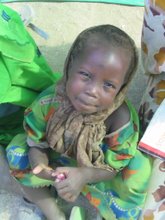
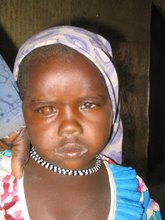
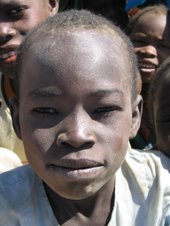
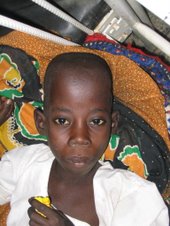
It is well established that genocide is a planned activity, not something that "just happens." When talking to survivors of genocide, one hears eerily similar stories, usually beginning with the denial of education. In the past, when the international community has seen precursors to genocide, the response has been ad hoc, with no systematic approach to intervening in an effective way.
The Genocide Prevention Task Force recognized these patterns and problems with past genocides and came out with a series of recommendations to help ensure future signs of genocide will be taken seriously. Genocide is planned, which means it is preventable.
You can be a part of helping to make sure the recommendations of the task force are implemented. The first week of December will be the kick-off of a National Canvass to get people to become a part of the movement to end genocide. You can join by signing up at ipledge2protect.org You can do more by getting your friends to sign up and by holding a Canvass event yourself, at your place of worship, at a social gathering, or even by going door-to-door. All the information you need is at ipledge2protect.org
The movement to end the British Slave Trade began with 12 people committed to seeing its end. It seemed to many like a hopeless endeavor when it started, with the British economy totally reliant upon the slave trade. Yet, it succeeded. The fight to end genocide is just as doable. You can be a part of it, starting today. Go to ipledgetoprotect.org and sign up now. Tell your friends. Become a member of the movement that will end genocide.
Tuesday, November 24, 2009
Sunday, November 8, 2009
Pledge to Protect Conference

SAIDC Advocacy Coordinator and 2009 Carl Wilkens Fellow Susan Smylie has been in Washington, DC this weekend attending the Pledge 2 Protect Anti-Genocide Conference.
She is shown here with Carl and Teresa Wilkens and other 2009 Carl Wilkens Fellows.
This is what the Anti-Genocide Generation looks like:

Layla Amjadi, STAND Student Director, inspiring us with her words "We are so blessed to be able to do this work."

Sam Bell, Genocide Intervention Network President, "It's about carrying the faith for a world without genocide with us wherever we go."


Monday, October 19, 2009
Sudan Policy Review
The long-awaited Sudan Policy Review was released by the Obama Adminstration today. Overall reaction from activist organizations is that it stronger than it was believed it was going to be based upon the statements and actions of Sudan Special Envy Gration, that it has the potential to be effective, but that we must keep the pressure on. The real marker of success will be changes on the ground in Sudan, including things like implementation of the Comprehensive Peace Agreement between North and South Sudan and the ability of Darfuries to return to their homes in peace and safety. In addition, it includes language about accountability for past actions, something that is important to the people of Darfur.
There is a new action on 1-800-GENOCIDE related to the release of the policy. Please take a few minutes to call today and ask to connect to the White House to leave a message for President Obama. You will be given information about what to say prior to being connected to the White House.
You can read reaction/analysis at the following sites:
http://blogfordarfur.org/archives/tag/sudan-policy-review
http://www.enoughproject.org/publications/fierce-urgency-implementation
http://www.genocideintervention.net/network/pressroom/pressreleases/2009/10/19/2881
http://www.latimes.com/news/opinion/la-oe-prendergast19-2009oct19,0,7655239.story
There is a new action on 1-800-GENOCIDE related to the release of the policy. Please take a few minutes to call today and ask to connect to the White House to leave a message for President Obama. You will be given information about what to say prior to being connected to the White House.
You can read reaction/analysis at the following sites:
http://blogfordarfur.org/archives/tag/sudan-policy-review
http://www.enoughproject.org/publications/fierce-urgency-implementation
http://www.genocideintervention.net/network/pressroom/pressreleases/2009/10/19/2881
http://www.latimes.com/news/opinion/la-oe-prendergast19-2009oct19,0,7655239.story
Friday, October 9, 2009
Please read this editorial that ran recently in the San Antonio Express-News. It points out the need for us to keep the pressure on President Obama to deliver on his campaign promises.
American Approach to Darfur Genocide Woefully Lacking
Want an easy action to follow up with? Stop Genocide Now has done the work for you, just go here and copy the provided message to send to the White House:
Stop Genocide Now
American Approach to Darfur Genocide Woefully Lacking
Want an easy action to follow up with? Stop Genocide Now has done the work for you, just go here and copy the provided message to send to the White House:
Stop Genocide Now
Tuesday, September 29, 2009
Top policy advisors on Sudan are supposed to meet today to discuss policy. Please take a minute to send President Obama a message asking him to get personally involved and fulfill his campaign promises. The link below will take you to a page where you can quickly send a message and also find a link to a Washington Post opinion piece that discusses disturbing comments made yesterday by Sudan Special Envoy Gration.
www.genocideintervention.net
here is the White House's response:
White House pushes back
www.genocideintervention.net
here is the White House's response:
White House pushes back
Thursday, September 24, 2009

 Relief Beads is a grassroots campaign raising awareness and support for Relief International’s humanitarian efforts in Darfur. Founded in 2007, Relief Beads has raised tens of thousands of dollars, which has provided life-saving relief for thousands of refugees. Each Relief Beads bracelet truly makes a difference!
 Contributions raised by Relief Beads aided in the construction of the only Women’s Development Center in Darfur. The center is a place where women and children victimized by the crisis are able to get professional medical and psychological support. Relief Beads bracelets are assembled by the women at the center and this provides them with an invaluable opportunity to contribute to their own livelihoods.
Relief Beads is also currently raising funds to build a Children's Malnutrition Center at the second largest refugee camp in Darfur, Zam Zam.
Please vist the website at www.reliefbeads.org to learn more about this wonderful organization the work they’re doing to help IDP’s in Darfur, and to order bracelets for yourself and your friends!
(from Orange County for Darfur. Reused with permission)
Sunday, September 13, 2009
Texas Holocaust and Genocide Commission
SAIDC coordinator of advocacy Susan Smylie had an op-ed in a recent San Antonio Express-News. Take a look at it here:
Why Study Genocide? Here's Why?
Why Study Genocide? Here's Why?
Subscribe to:
Posts (Atom)